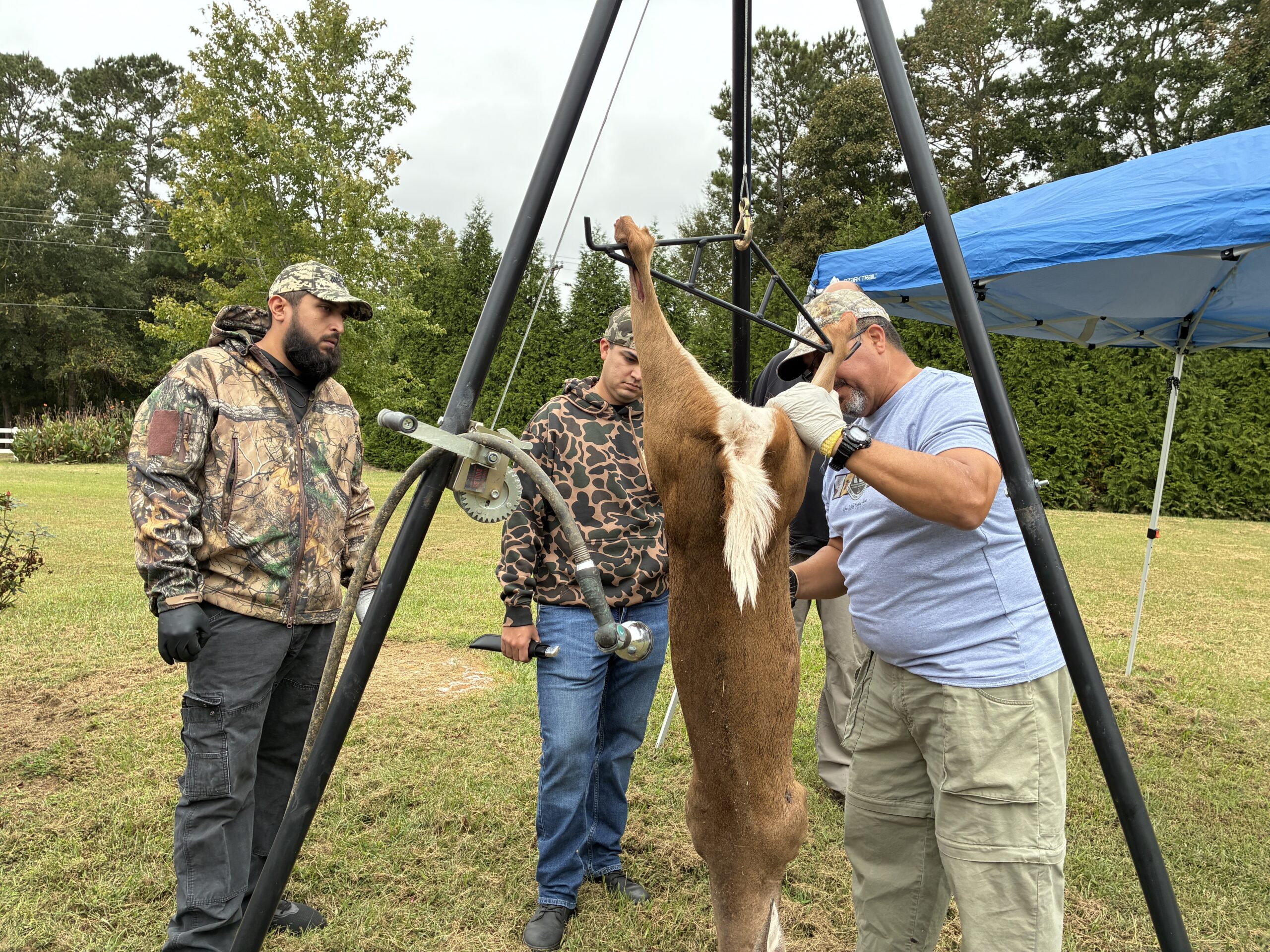
Harvesting a deer is only the beginning of your journey. Properly processing your deer not only delivers premium, delicious meat for your family but also honors the animal and the land with safety and respect. Missed one of our hands-on deer processing events? No worries! Visit our Deer Processing webpage, packed with expert tips to get you started.
At a top level, here’s a step-by-step guide to take your deer from field to freezer.
🦌 Field Dressing Cool the meat as quickly after the harvest as you can. In most cases this means you’ll want to field dress the deer to remove internal organs and cool the carcass.
Use clean, sharp knives and wear gloves to minimize contamination. Avoid puncturing the stomach or intestines whenever possible to prevent the spread of gut bacteria. Avoid dragging the carcass through water; and try to keep the carcass as free of dirt as possible.
🧼 Safe Handling Transport the deer discretely. Once home, rinse the carcass well, and allow to drip dry. If not processing it right away, consider spraying it down with a mixture of 1:1 food grade white vinegar: water to retard bacterial growth.
Aging meat allows rigor to relax and time for enzymes to tenderize the meat. You can do this by hanging the carcass in a temperature-controlled space (ideally 34–40°F) for 3–7 days. Alternatively, you can age the meat after it has been removed from the carcass. If aging cut meat in your refrigerator, don’t mix raw meat with fresh food. Icing meat in a cooler with the cooler drain open is a better option.
Always sanitize surfaces, tools, and hands before and after handling. Trim away and discard any damaged or bloodshot meat.
🔪 Breaking Down the Carcass Start by skinning the deer, then remove front legs (shoulders), hind legs, backstraps, and neck. The tenderloins lie inside the cavity along the spine—don’t miss them!
Use your fingers, then boning knives to separate muscle groups and trim fat and sinew.
🥩 Cuts of Meat
- Backstraps: Prime steaks and rolled roasts
- Tenderloins: Best grilled or pan-seared
- Hindquarters: Roasts, steaks, and jerky
- Front shoulders, Scraps: Ground meat, stew cuts
- Neck, ribs, shanks: Great for slow cooking or grinding
- Heart, Liver: slice and pan fry
🧊 Packaging and Freezing Vacuum seal or tightly wrap cuts first in plastic wrap then freezer paper. Label with date and cut type. Freeze promptly to preserve quality.
🌱 Responsible Disposal Dispose of bones and unused parts ethically: Return to near site of kill whenever possible. If disposed of elsewhere, bury remains away from water sources, use approved landfill, or approved composting options.
Processing your own deer allows you to maintain full control of quality, ensures that nothing goes to waste, and allows you to process your meat in ways that allow you to make the most of your harvest. With care and respect, you’ll fill your freezer with clean, sustainable meat and honor the hunt.