North Carolina deer hunters often spend late summer hanging trail cameras, clearing shooting lanes, and planting food plots. However, the most critical element of early-season success is already hanging high above your head. Mast—the nuts, berries, and fruits produced by woody plants—is the primary driver of deer movement during the autumn months. Relying on historical hotspots or assuming that deer will visit a dry ridge is a fast track to a wasted opening week. If you want to fill your tag when the season opens, you need to grab your binoculars right now and start scouting the canopy.
Understanding the Power of Mast
Deer are opportunistic feeders, but they are highly selective. When high-quality natural mast is available, it takes absolute priority over agricultural fields and commercial bait piles.
Mast is divided into two distinct categories:
- Hard mast: Acorns, hickory nuts, and beechnuts. These provide the fat and carbohydrates deer need to survive the winter.
- Soft mast: Persimmons, wild grapes, pokeberries, and plums. These provide high sugar content and immediate energy during the late summer and early fall.
If you pattern deer based on a food source that fails to produce, you are wasting your hunting time. Scouting the mast crop allows you to hunt where the food actually is, rather than where you hope it will be.
Glassing the Canopy: The Binocular Technique
You cannot accurately judge a mast crop from the forest floor with the naked eye. Leaves are thick in August and September, easily hiding developing fruit. Step into the woods equipped with a quality pair of 8×42 or 10×42 binoculars to inspect the upper third of the timber.
When evaluating hard mast, focus heavily on the oak species. White oaks are the undisputed king of early-season deer hunting. Their acorns contain less tannic acid than red oaks, making them sweet and highly palatable. Deer will walk past a mountain of red oak acorns to get to a single, dropping white oak. Use your optics to scan the tips of the branches on mature white oaks. Look for the distinct, bumpy caps and green nuts clustered near the leaves.
Next, transition to soft mast edges. Walk the old fields, pine thicket borders, and overgrown fencerows where persimmon trees and wild grapevines thrive. Persimmons look like small, green golf balls early in the season, hanging heavily from fragile branches. Wild grapes will hang in tight, green clusters amidst thick, three-lobed leaves. Noting which specific trees are loaded with fruit gives you an immediate blueprint for your opening-day tree stand placement.
Reading the Forest Floor for Clues
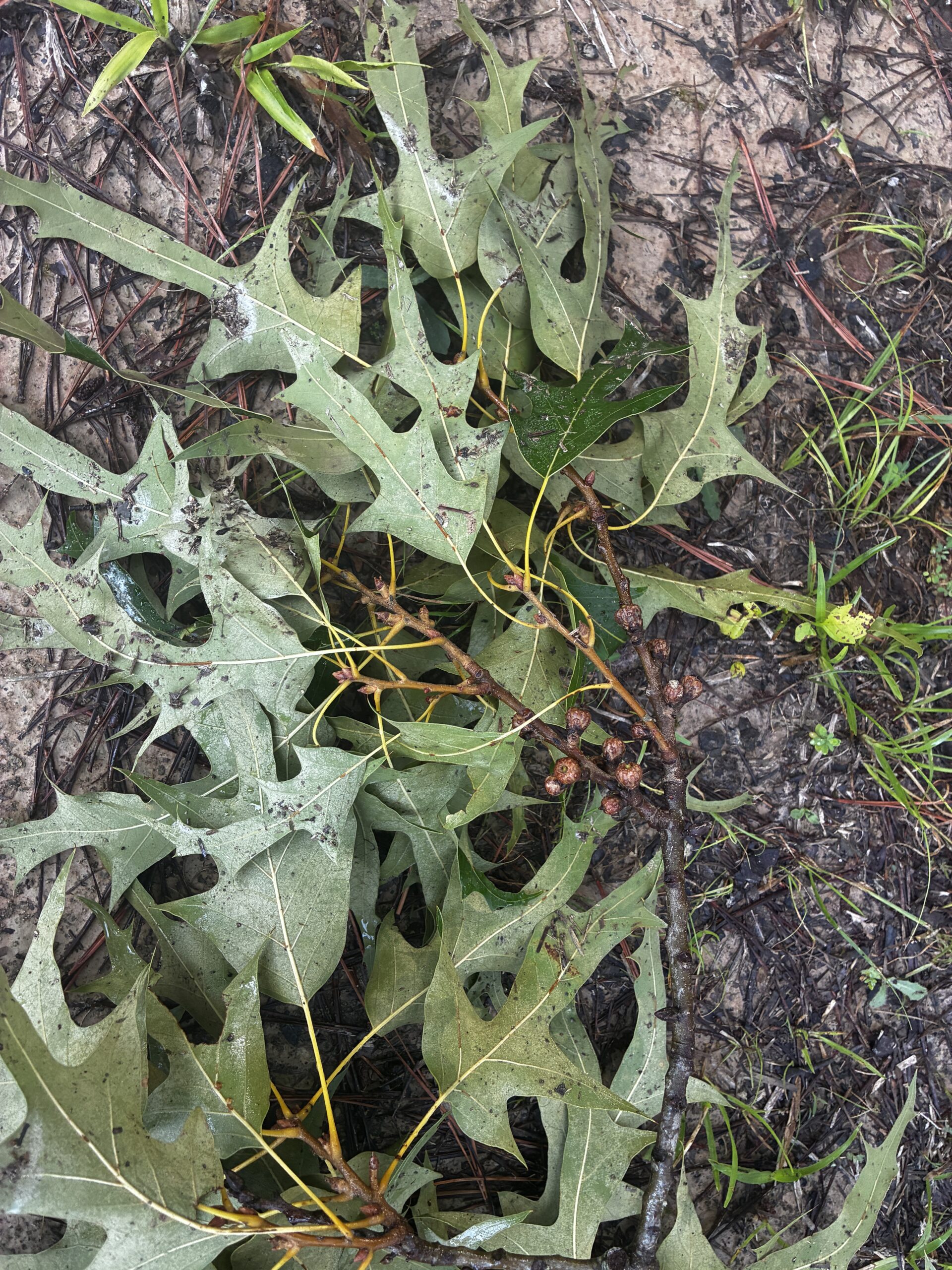
While your eyes should mostly be on the canopy, do not ignore the ground beneath your boots. Late summer storms, high winds, and heavy summer downpours frequently rip small branches and twigs from the upper canopy.
Inspect these fallen branches carefully. If you find downed limbs from a white oak or a persimmon tree, look at the stems. Are there immature, aborted fruits or tiny acorns attached to the twigs?
Finding immature fruit on fallen branches confirms two things:
- Species production: That specific tree is actively trying to produce a crop this season.
- Crop health: The size and density of the immature fruit will tell you if the tree is suffering from drought stress or if it is on track for a bumper crop.
Conversely, if you find plenty of fallen branches with zero evidence of flower scars or immature nuts, you can cross that specific pocket of timber off your map for the early season.
Building Your Opening Day Strategy
A tree that produced hundreds of pounds of acorns last year might be completely barren this year. Oak trees operate on cyclical production schedules, and localized late-spring frosts can wipe out soft mast flowers in one hollow while leaving the next ridge untouched.
Use your scouting data to map out “hot” trees. Mark every loaded persimmon and producing white oak on your hunting app. When opening day arrives in North Carolina, ignore the places where deer used to be. Hang your stand downwind of the specific trees you visually verified through your binoculars. By focusing on the exact branches holding food, you will maximize your time in the woods and position yourself perfectly for an early-season harvest.


