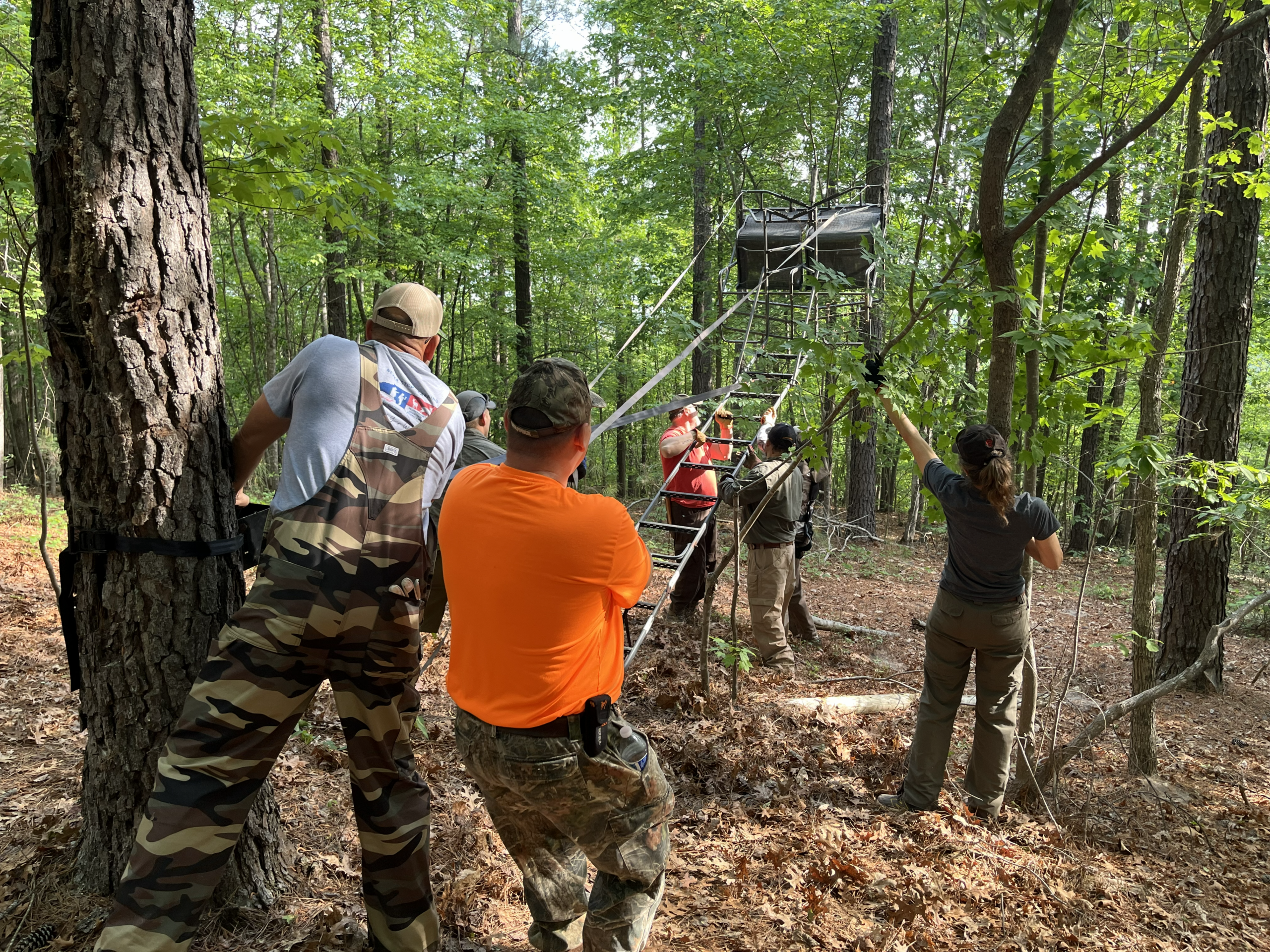
Saturday, April 25, 2026, marked the second work day of the New Hill Hunter Education and Mentoring Program’s 2026 season, and participants didn’t just learn about hunting—they built it. With tools in hand and mentors at their side, the group spent the day tackling the kind of real-world equipment work that experienced hunters know is every bit as important as the hunt itself.
Moving a Stand, Learning a System
The centerpiece of the day was a full tree stand relocation. Students walked through every phase of the process: safely dismantling an existing stand, properly preparing it for transport, and reinstalling it at an alternative site. What might look like simple labor from the outside is actually a discipline—each step has a right way and a wrong way, and getting it wrong has consequences. By working through the process hands-on, participants left with the kind of muscle memory and situational awareness that no classroom can replicate.

Maintenance That Keeps Hunters Safe
Alongside the relocation, the group turned their attention to tree stand maintenance—specifically the inspection and replacement of fall arrest lines and equipment haul lines. These components are often overlooked by newer hunters, but they are the difference between a safe season and a serious injury. Mentors walked participants through how to evaluate line condition, when to replace rather than repair, and how to rig haul lines correctly for getting gear up and down from elevation. It’s unglamorous work, but it’s foundational.

A New Stand Takes Shape
To cap the day, the group tackled something new from the ground up: the assembly of a brand-new raised hunting stand. From sorting hardware to making sure every connection was solid and level, participants got a full picture of what goes into building a safe, functional elevated platform. An elevated blind box relocation rounded out the day’s heavy lifting, giving students exposure to yet another type of hunting structure and the logistics involved in moving it.

Purpose Behind Every Task
None of today’s work was just busywork. Every stand moved, every line replaced, and every bolt tightened is setting the stage for upcoming field trainings where students will put this equipment to use in live hunting scenarios. Understanding the gear—how it’s built, how it fails, and how to maintain it—makes every future lesson safer and more effective. Work day or field day, the learning never stops.
Learn more at www.NCLearnToHunt.com